
Kimi K3 Benchmarks: How to Judge the Model’s Real Performance
People search “Kimi K3 benchmarks” the moment Moonshot AI announces a new model, but a benchmark number only means something once you know what it measures. Open the free Kimi K3 chat to try the model yourself, then use this guide to read any score you see about it more critically.
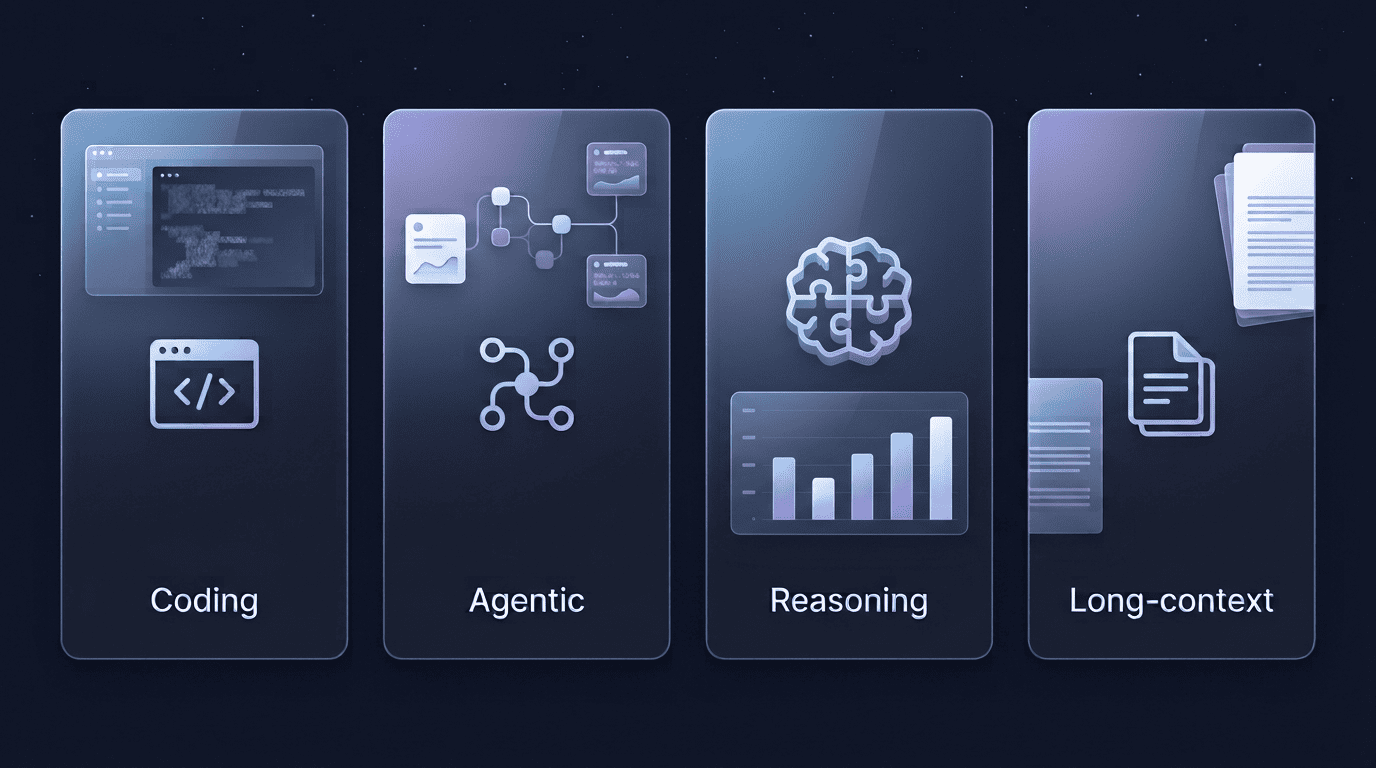
This page walks through the benchmark categories that matter for a model positioned like K3 — coding, agentic tool-use, reasoning, and long-context. Moonshot AI, the Beijing-based company behind the Kimi line, is profiled independently on Wikipedia; the sections below cover how that line has evolved from K2, and exactly where to find verified, up-to-date results instead of screenshots.
Disclaimer: kimik3.pro is an unofficial free chat and reference site. It is not affiliated with, endorsed by, or operated by Moonshot AI. All trademarks belong to their respective owners. For official specifications and benchmark reports, always check Moonshot’s own channels.
What Kimi K3 Is — and What Moonshot Officially States
Kimi K3 is Moonshot AI’s newer flagship model, positioned as the successor to Kimi K2. Moonshot’s own documentation describes it as a Mixture-of-Experts (MoE) model in the roughly 2.8-trillion-parameter class, built on a new attention design — Kimi Delta Attention (KDA) combined with Attention Residuals — with native visual understanding and a 1M-token context window. Moonshot AI itself frames its mission simply: “Seeking the optimal conversion from energy to intelligence,” as stated on the company’s homepage.
Kimi K3 at a glance (verified specs only)
Moonshot’s documentation publishes these specifications, but at the time of writing it defers benchmark numbers to a forthcoming technical report rather than listing them alongside the spec sheet. Here is what is officially stated:
- Architecture: Mixture-of-Experts (MoE) in the ~2.8-trillion-parameter class, using Kimi Delta Attention plus Attention Residuals.
- Modality: Native visual understanding built into the model, not bolted on.
- Context window: 1M tokens stated as the maximum, positioned for long-document and long-conversation work.
- Weights: Open weights announced for release by July 27, 2026.
- Lineage: Presented as the newer Kimi model succeeding Kimi K2 — where a detail is thin, Moonshot’s own phrasing is “announced” or “stated,” not “measured.”
As background on the company behind the model, Moonshot AI is described on Wikipedia as “an artificial intelligence company based in Beijing, China that develops large language models and foundation models aimed at achieving AGI,” with Kimi as its flagship chatbot product — see the Moonshot AI Wikipedia entry for that background.
Why “benchmarks” ≠ “specs”
A parameter count and a context-window size are architecture facts — they describe what the model was built to do. A benchmark score is a measured outcome on a standardized test, run under specific conditions, that tells you how well the model actually performs a task. A model can ship with a huge context window and still score poorly on a reasoning test, because the two answer completely different questions: one is capacity, the other is competence. That distinction is why the rest of this page is about tests and methodology, not the spec sheet.
The Benchmark Categories That Actually Matter
For a model positioned like K3 — coding, knowledge work, long-horizon agents — four benchmark families carry most of the signal:
- Coding (agentic): does the model resolve real software issues, not just complete a snippet.
- Agentic / tool-use: can it reliably chain multiple tool calls to finish a real task.
- Reasoning / knowledge: how it performs on hard, graduate-level questions.
- Long-context: whether it can actually retrieve and reason over the full length of its stated window.
| Category | Example benchmarks | What it measures | Why it matters for K3 |
|---|---|---|---|
| Coding (agentic) | SWE-bench, SWE-bench Verified | Can the model resolve a real GitHub issue so hidden tests pass | Core use case: repo-scale coding |
| Agentic / tool-use | Terminal-Bench, tool-calling suites | Reliability of multi-step tool use to finish a real task | Long-horizon agent workflows |
| Reasoning / knowledge | GPQA Diamond, Humanity’s Last Exam, SciCode | Hard graduate-level reasoning and science | General intelligence signal |
| Long-context | Needle-in-a-haystack, long-doc QA | Retrieval/reasoning over very long inputs | Justifies the 1M-token window |
| Composite / human-pref | Artificial Analysis Index, LMArena | Aggregate score / human preference | Cross-model, at-a-glance ranking |
Coding: SWE-bench and why “resolved rate” is the number to watch. SWE-bench gives a model a real bug report pulled from an actual open-source Python repository and asks it to produce a patch; the score is the percentage of issues where the repo’s hidden unit tests pass afterward — commonly called the “resolved rate” or pass@1. SWE-bench Verified is a human-filtered subset built to remove ambiguous or unsolvable tasks. SWE-bench itself describes its scope this way: “SWE-bench is a benchmarking platform that evaluates AI agents on their ability to resolve software engineering tasks,” and it “hosts official leaderboards comparing different agents and models across multiple benchmark variants, including verified, multilingual, lite, full, and multimodal versions” (see swebench.com). No K3 resolved-rate figure is quoted here — check the live leaderboard directly for current numbers.
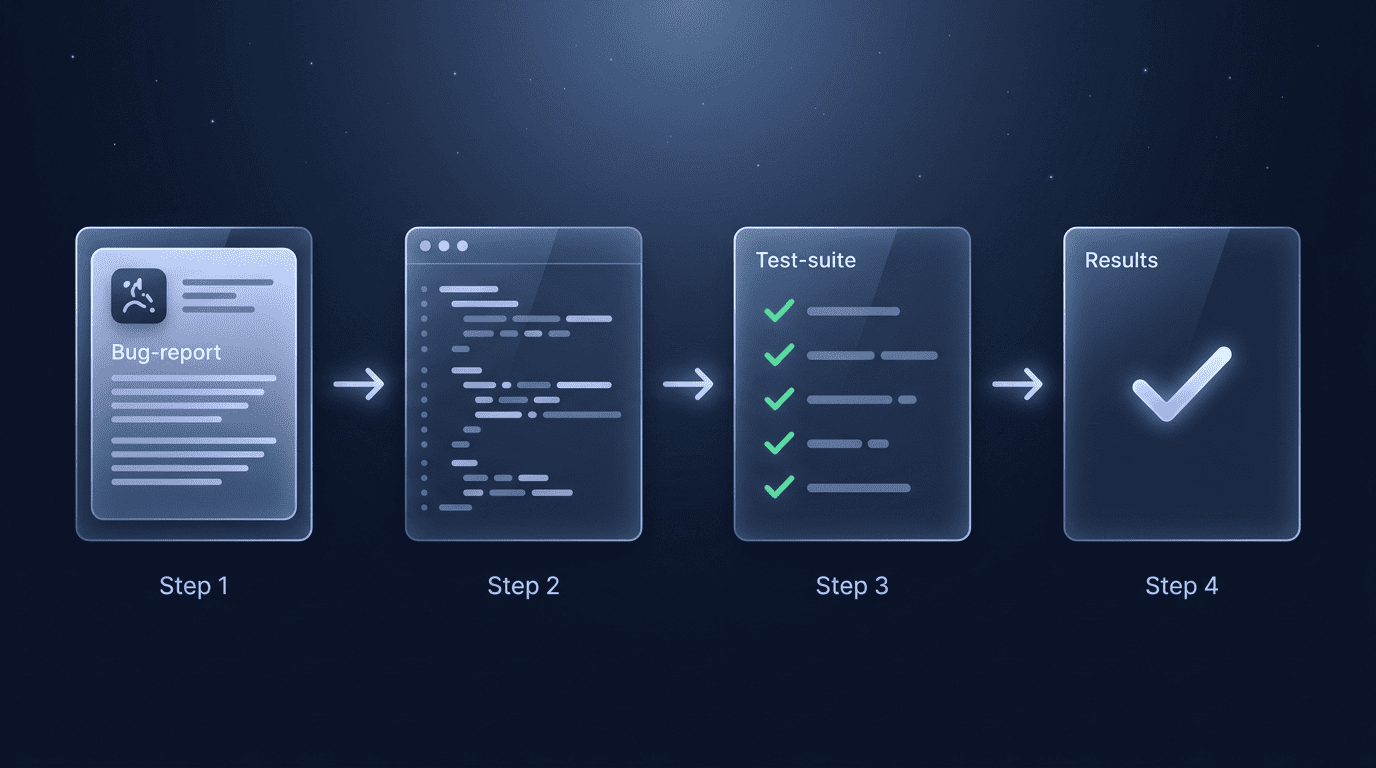
Agentic: Terminal-Bench and tool-calling reliability. Terminal-Bench measures whether an agent can complete hard command-line tasks end-to-end — compiling a project, configuring a server, debugging a broken environment — graded by automated checks on the terminal’s final state rather than a human reading the transcript. The benchmark’s own description frames it as “a collection of harbor-native benchmarks to help agent makers quantify their agents’ terminal mastery,” covering tasks that span “software engineering, machine learning, security, data science, and more.” Independent commentators covering agentic coding tools have repeatedly made a related point: long-conversation tool-calling reliability, not raw model knowledge, is increasingly what separates one model from another in day-to-day agent use — exactly the gap Terminal-Bench is designed to expose, and a more honest signal for K3’s agentic claims than a single coding score.
A collection of harbor-native benchmarks to help agent makers quantify their agents’ terminal mastery.
Terminal-Bench
Reasoning & long-context. GPQA Diamond and Humanity’s Last Exam represent the hard end of reasoning evaluation — graduate-level science and cross-disciplinary questions designed to resist memorization. Long-context evaluations, by contrast, stress-test the 1M-token window itself: needle-in-a-haystack tasks bury a fact deep in a huge document and check whether the model can still find and use it. A big context window is only useful if long-context retrieval scores hold up across that whole range — capacity is not competence. Kimi models, including K2, have also been distributed through third-party API marketplaces such as OpenRouter, which is a separate access point from Moonshot’s own platform and worth checking if you want to compare provider-side latency and cost alongside raw benchmark scores.
How the Kimi Line Has Performed (K2 → K3)
The credible way to talk about K3’s performance today is through the trajectory of the Kimi line and what Moonshot has announced about K3 relative to K2, not through leaked score screenshots circulating online — though nothing here substitutes for spending a few minutes in the model itself; you can try Kimi K3 directly to see how it handles your own prompts.
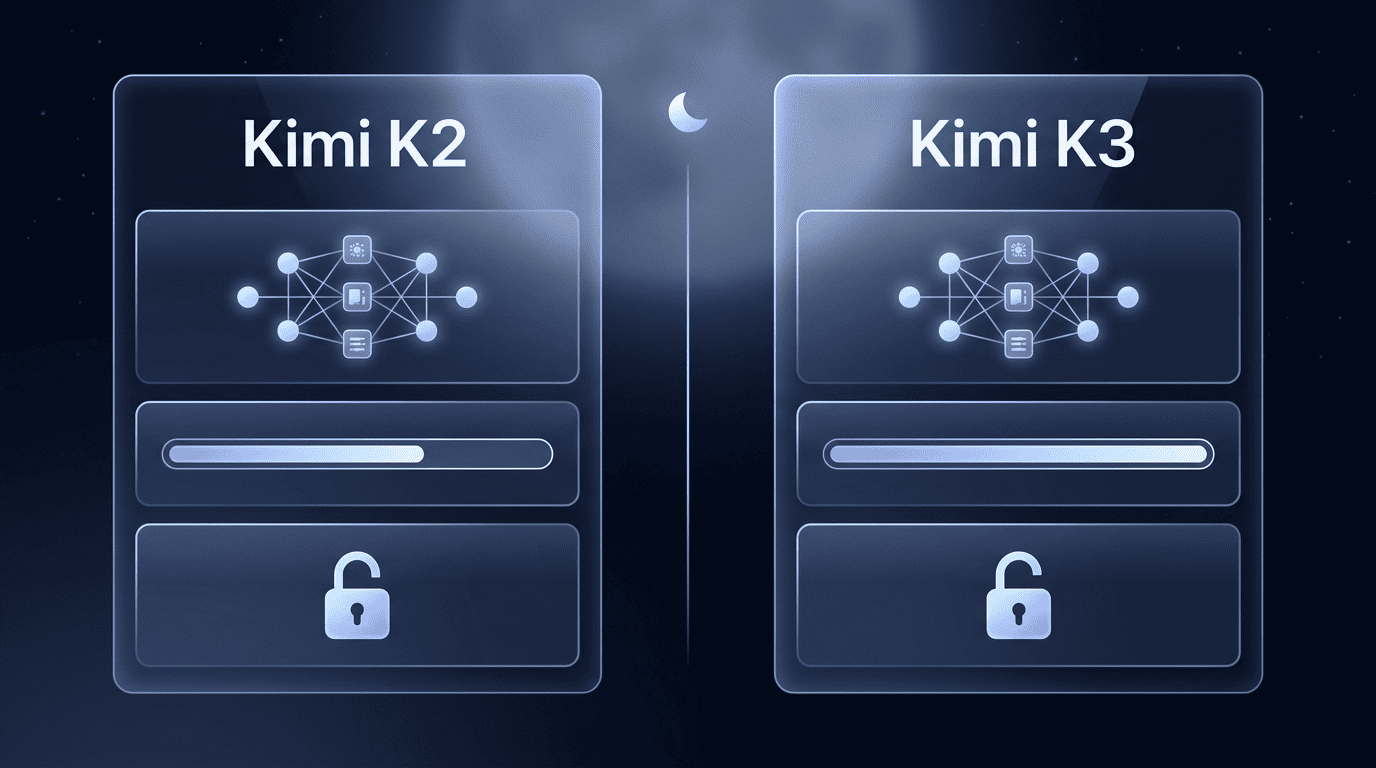
| Attribute | Kimi K2 (predecessor) | Kimi K3 (per Moonshot docs) |
|---|---|---|
| Architecture | Open-weight sparse MoE | MoE, Kimi Delta Attention + Attention Residuals |
| Known strength | Strong coding / agentic (open-weight) | Coding, knowledge work, long-horizon agents |
| Context window | Large (see official K2 repository) | 1M tokens (stated) |
| Weights | Open-weight (released) | Open weights announced for release |
| Verified scores | On official K2 report / leaderboards | Deferred to forthcoming technical report |
What K2 established
Kimi K2’s own repository describes it as “a state-of-the-art mixture-of-experts (MoE) language model with 32 billion activated parameters and 1 trillion total parameters” that “achieves exceptional performance across frontier knowledge, reasoning, and coding tasks while being meticulously optimized for agentic capabilities” — see the official Kimi-K2 repository on GitHub for the primary source. That open-weight release and its documented coding/agentic focus is the credible, verifiable baseline the Kimi line built on; any specific K2 score should be checked against that repository or an independent leaderboard, not repeated from memory.
What Moonshot says changed in K3
Per Moonshot’s official documentation, K3 moves to a new attention design combining KDA and Attention Residuals, a larger MoE parameter class, native (not bolted-on) vision, and a 1M-token context window. These are announced architectural changes. Verified head-to-head benchmark deltas against K2 should be read from Moonshot’s technical report and independent leaderboards once those numbers are published, rather than inferred from the spec sheet alone.
Which frontier models K3 is measured against
On the proprietary side, the frontier peers people most often benchmark Kimi K3 against are OpenAI’s current flagship, GPT-5.6 Sol, and Anthropic’s Claude Fable 5; among open-weight models, DeepSeek is the closest comparison. This guide does not assert who wins any given test — leaderboard positions move with every release and every test harness — so treat any “K3 beats GPT-5.6 Sol” or “K3 beats Claude Fable 5” headline as a claim to verify on the live leaderboards linked below, not a settled fact. When Moonshot’s technical report lands, cross-check its head-to-head numbers against the independent evaluators rather than a vendor slide.
How to Read AI Leaderboards Without Being Misled
A leaderboard screenshot on social media is the least reliable source you can use. Here is a practical checklist for vetting any Kimi K3 benchmark claim you come across.
- Who ran it? Vendor-reported numbers are best-case scenarios; independent evaluators like Artificial Analysis or LMArena are a stronger signal.
- Which exact benchmark and version? “SWE-bench” and “SWE-bench Verified” are different tests with different difficulty.
- What harness and settings were used? Agent scaffolding and reasoning effort can shift scores substantially.
- Is the comparison apples-to-apples? Same test, same date, same conditions — not a K3 result against a K2 number from months earlier.
- Could the test be contaminated? A benchmark that leaked into training data stops measuring anything useful; newer or held-out sets are safer.
- Is it reproducible? A real result links to a methodology page and a leaderboard entry, not just a screenshot.
Beyond that checklist, a few patterns are reliable warning signs on their own:
- Cites competitor model names you cannot find on any official site.
- No link to a primary source or leaderboard entry.
- Precise decimals with no stated methodology (“81.2 on X”) sourced from a news blog rather than the benchmark itself.
- A single anecdotal prompt presented as if it were a full benchmark.
LMArena vs static benchmarks
LMArena, now operating as Arena, describes itself as “The Official AI Ranking & LLM Leaderboard,” built around head-to-head comparisons between models rather than a single fixed test — see lmarena.ai. It ranks models by aggregating anonymous human votes cast in side-by-side comparisons, which captures preference rather than correctness, and a model typically needs a large volume of votes before its ranking is considered stable. Static benchmarks like SWE-bench measure a fixed, gradable task instead. The two approaches answer different questions, so a careful read of K3’s standing uses both rather than either alone.
Where to Find Verified Kimi K3 Results
Skip the screenshots. The primary source for architecture details and, once published, headline benchmark numbers is Moonshot AI’s own site and technical report at moonshot.ai. For live, independently maintained coding results, the SWE-bench leaderboard tracks resolved-rate rankings across models and harnesses as they are submitted, rather than a single vendor’s self-reported figure.
For preference-based ranking, LMArena aggregates human head-to-head votes into an Elo-style leaderboard built on live model comparisons — useful alongside, not instead of, static tests. Artificial Analysis fills a third role as an independent evaluation platform that says its goal is to help users “understand the AI landscape to choose the best model and provider for your use case,” combining an intelligence index with cost and speed data so a benchmark score can be weighed against real-world price and latency. For neutral background on the company itself rather than its models, Moonshot AI’s Wikipedia entry is a reasonable starting point.
When Moonshot publishes the K3 technical report, cross-check its headline numbers against the independent leaderboards above before repeating them anywhere. In the meantime, you can form your own impression by testing the model directly in the free Kimi K3 free chat.