
Kimi K3: Moonshot AI’s Next-Generation Model, Explained
Kimi K3 is the newest large language model in Moonshot AI’s Kimi family, and you can try Kimi K3 free in the browser right now. This page walks through what K3 is, what it’s built to do well, and how it stacks up against GPT-5.6 Sol, Claude Fable 5, DeepSeek and Gemini in plain English.

Moonshot has framed K3 as the successor to the open-weight Kimi K2, carrying forward the line’s signature focus on long context, coding and agentic tool use. Specific benchmark scores and technical details are evolving, so this guide sticks to what Moonshot has actually said rather than guessing at numbers.
What Is Kimi K3?
Kimi K3 is the next-generation model in Moonshot AI’s Kimi line — the underlying model that powers the Kimi assistant. Moonshot AI is a Beijing-based company founded in 2023 by Tsinghua University alumni, including Yang Zhilin, and the company’s name nods to Pink Floyd’s lunar-themed album. Kimi began life as a public chatbot in late 2023 and quickly became known for handling unusually long inputs. Moonshot AI’s Kimi K3 is positioned as the newer model that follows the open-weight Kimi K2, and where public details are still thin, it’s fairer to say a claim is “per Moonshot’s announcements” than to state it as settled fact.
Who built Kimi K3 and the Kimi family
Moonshot AI was established in March 2023 by a group of Tsinghua-affiliated founders led by Yang Zhilin. As Wikipedia summarizes it:
Moonshot AI is an artificial intelligence (AI) company based in Beijing, China. It is one of China’s six “AI Tigers,” founded in China to compete against American frontier labs.
Wikipedia — Moonshot AI
The Kimi brand covers two things at once: the consumer-facing assistant people chat with, and the underlying K-series of models — K1, K2 and now K3 — that power it. Moonshot has reportedly raised funding at a valuation in the tens of billions of dollars as the company has scaled, though exact figures shift with each funding round and are best treated as a moving target rather than a fixed number.
Where Kimi K3 sits in the Kimi lineup
Kimi K2 set the template K3 builds on: an open-weight Mixture-of-Experts (MoE) model with roughly 1 trillion total parameters and about 32 billion active per inference pass, with its weights released publicly in July 2025. Moonshot’s own page for that release, Kimi K2: Open Agentic Intelligence, is titled that verbatim — a framing that signals the model’s priority was never pure chat, but planning and executing tasks.
Kimi K3 is positioned as the next step up from that base — newer, and per Moonshot’s own messaging, more capable across the same core dimensions. This article avoids repeating specific parameter counts, benchmark scores or release dates for K3 itself, since Moonshot has not published a single settled spec sheet and third-party numbers circulating online are unverified.
Key Capabilities of Kimi K3
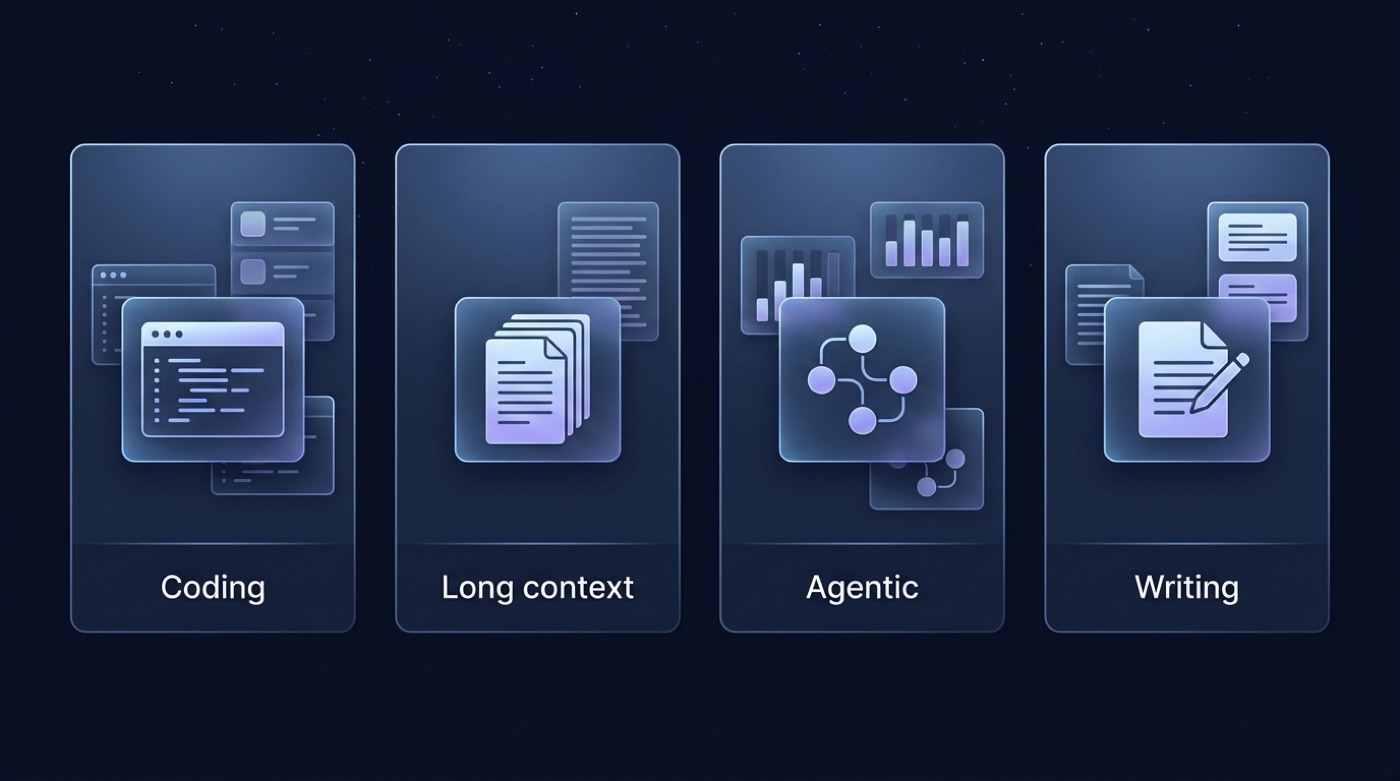
Moonshot has consistently built the Kimi line around four pillars: strong coding ability, an unusually long context window, agentic tool use, and general-purpose writing and reasoning. Kimi K3 continues that focus rather than reinventing it.
- Coding and software engineering — writing, debugging and reasoning about code across large codebases
- Long context — ingesting long documents, transcripts or entire repositories in one go
- Agentic / tool use — planning multi-step tasks and calling external tools, not just answering questions
- Writing, analysis and reasoning — drafting, summarizing and structured reasoning across many languages
| Capability | What it means | Typical use |
|---|---|---|
| Coding | Generates, explains and debugs code with awareness of large projects | Agentic coding, code review, refactoring |
| Long context window | Accepts large volumes of text in a single prompt | Long PDFs, full codebases, multi-document analysis |
| Agentic / tool use | Plans steps and invokes external tools or APIs | Automations, research agents, multi-step workflows |
| Writing & reasoning | General-purpose drafting and structured analysis | Summaries, reports, multilingual writing |
Coding and software engineering
The Kimi line has been coding-forward since K2, which posted strong results on SWE-bench Verified — a benchmark that scores how well a model resolves real GitHub issues — with pass rates cited in the mid-60% range by Moonshot and independent evaluators (treat the exact figure cautiously, since it varies by test harness and update). Kimi K3 continues that emphasis, with Moonshot positioning it for agentic coding and longer-horizon engineering tasks rather than single-shot code snippets.
Long context (long documents & codebases)
Long context is the trait Kimi is best known for. Early versions of the chatbot handled roughly 200,000 Chinese characters per conversation, and by March 2024 Moonshot said Kimi could process around 2 million Chinese characters in a single prompt — a scale that made headlines at the time. Moonshot has continued positioning the Kimi line for very long context, and Kimi K3 is reported to extend that window further, though no exact token count for K3 is stated here as settled fact.
Agentic workflows and tool use
Kimi K2 shipped under the banner “Open Agentic Intelligence” — a model built to plan and execute multi-step tasks using external tools, rather than only produce chat replies. Kimi K3 continues that agentic focus, which matters for anyone building automations, research agents or workflows that need a model to call APIs and follow through on a task rather than stop at the first answer.
Writing, analysis and reasoning
Beyond code and agents, the Kimi line handles general-purpose work: drafting long-form text, summarizing dense documents, and structured, step-by-step reasoning. Moonshot has positioned recent Kimi models with “thinking”-style modes for harder reasoning problems, and the line has always leaned multilingual, with particular strength across Chinese and English content.
How Big Is Kimi K3’s Context Window?
A context window is simply how much text a model can hold in its “working memory” at once — the whole conversation, plus anything you paste in, has to fit inside it. A larger window means you can drop in an entire codebase, a long PDF, or several documents at once and have the model reason across all of it rather than losing track partway through.
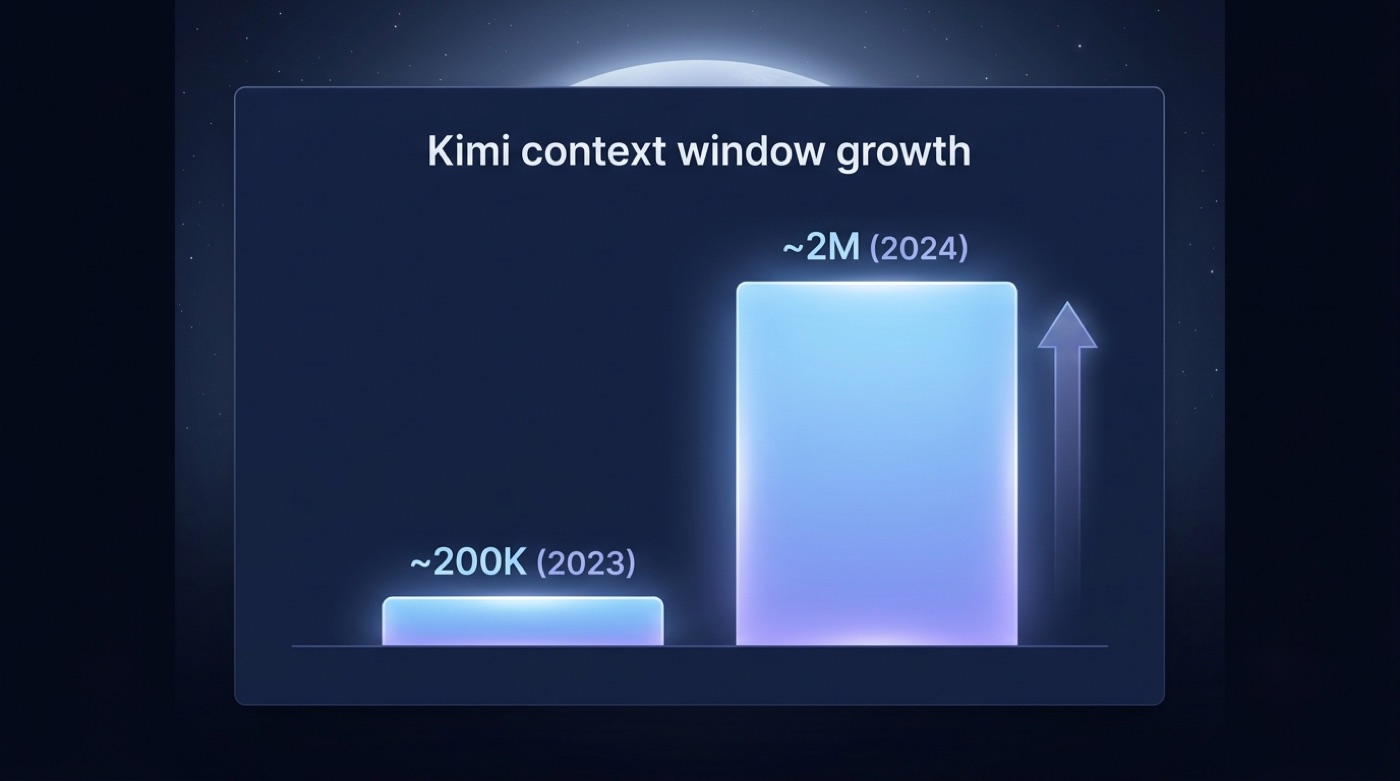
Kimi’s long-context heritage is the credible anchor here: the chatbot moved from handling around 200,000 Chinese characters at launch to Moonshot’s claimed roughly 2 million Chinese characters by March 2024. As Wikipedia notes about the original release:
Kimi “was notable for supporting an exceptionally large context window… making it a pioneer in that capacity at the time,” per the Wikipedia entry on Kimi (chatbot). Moonshot has kept extending that window with each generation, and Kimi K3 is reported to push it further still — but exact token figures for K3 aren’t given here as confirmed fact, since Moonshot hasn’t published one fixed number.
Why a long context window matters
- Whole repositories — paste an entire codebase instead of a few files at a time
- Book-length documents — analyze long PDFs, contracts or manuscripts without chunking them manually
- Long chat memory — the model keeps track of earlier turns in a long conversation
- Lightweight document search — do rough retrieval-style analysis over big inputs without a separate vector database
How Kimi K3 Compares to GPT-5.6 Sol, Claude Fable 5, DeepSeek and Gemini
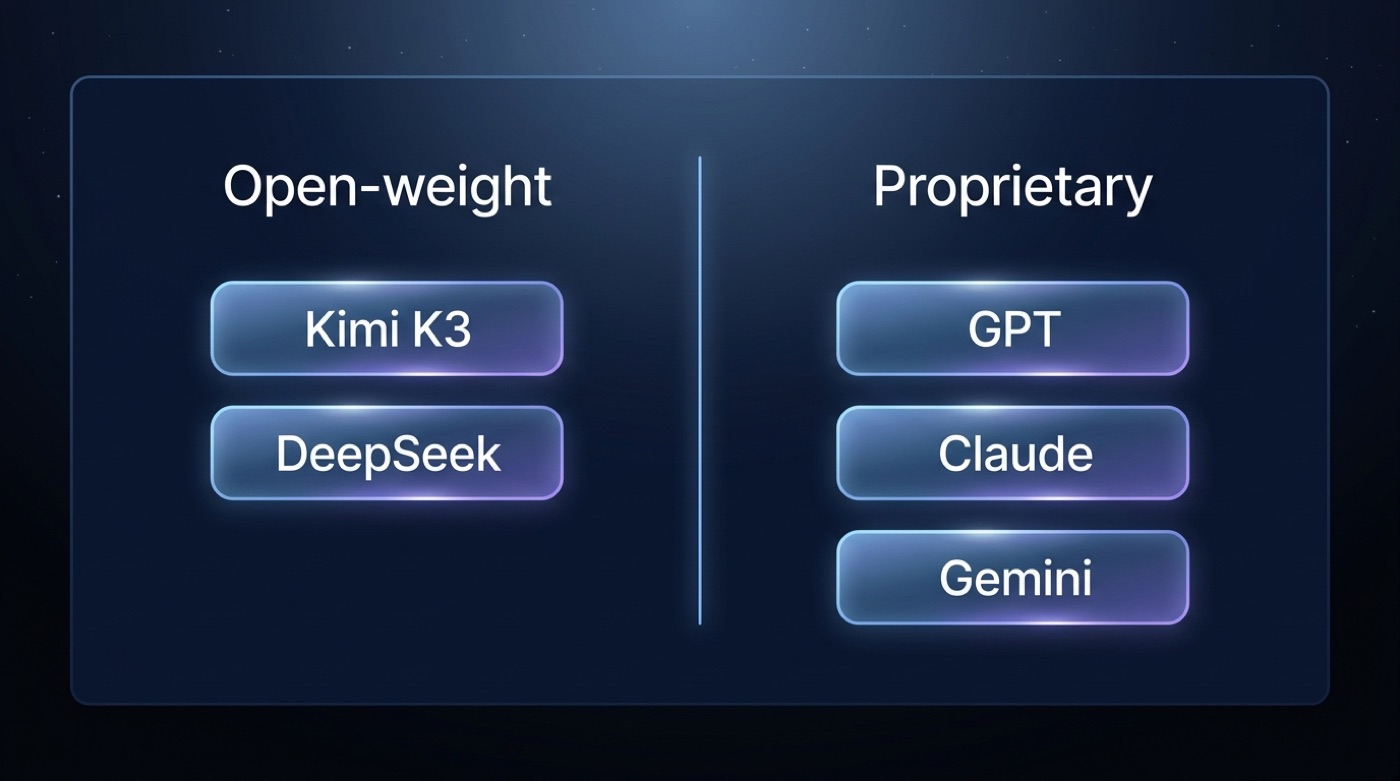
At a high level, Kimi K3 sits in the open-weight, cost-efficient corner of the field, leaning on long context and agentic/coding strength as its differentiators. OpenAI’s GPT-5.6 Sol, Anthropic’s Claude Fable 5 and Google’s Gemini are closed, proprietary frontier models you access only through their makers’ apps and APIs. DeepSeek is the closest peer in spirit — another leading Chinese lab shipping strong open-weight models. None of the specific leaderboard scores circulating for K3 online are verified, so the comparison below stays qualitative rather than pretending to cite numbers Moonshot hasn’t confirmed. You can try Kimi K3 AI directly to form your own impression against whichever of these you use most.
| Model family | Openness | Headline strengths | How you access it |
|---|---|---|---|
| Kimi K3 (Moonshot AI) | Open-weight leaning, per Moonshot’s pattern | Long context, coding, agentic/tool use | Web chat, Kimi app, API, self-host (when weights ship) |
| GPT-5.6 Sol (OpenAI) | Proprietary | General-purpose reasoning, broad ecosystem | ChatGPT, OpenAI API |
| Claude Fable 5 (Anthropic) | Proprietary | Careful reasoning, coding, long-form writing | Claude apps, Anthropic API |
| Gemini (Google) | Proprietary | Multimodal, deep Google integration | Gemini app, Google AI Studio, API |
| DeepSeek | Open-weight | Cost-efficient, strong reasoning and coding | Web chat, app, API, self-host |
Kimi K3 vs GPT-5.6 Sol and Claude Fable 5 (proprietary frontier)
GPT-5.6 Sol and Claude Fable 5 represent the closed, hosted end of the market — you use them entirely through OpenAI’s and Anthropic’s own products and APIs, with no access to model weights. Kimi K3, by contrast, follows Moonshot’s pattern of leaning toward open-weight availability, which typically translates into lower cost per token and the option to self-host once weights are released. Where GPT-5.6 Sol and Claude Fable 5 compete on broad, polished general-purpose reasoning, Kimi K3’s edge is concentrated in long-context handling and agentic coding tasks.
Kimi K3 vs DeepSeek and Gemini
DeepSeek is Kimi K3’s closest sibling in approach: both are Chinese labs shipping open-weight models optimized for reasoning and coding at a lower cost than the Western proprietary players. Gemini sits at the opposite end — a proprietary, multimodal model tightly wired into Google’s own products and search infrastructure. Positioned among these, Kimi K3 is one of the open-weight leaders rather than a proprietary alternative, which matters if self-hosting or API cost is a factor in your decision.
How to Use Kimi K3
There are several practical ways to get Kimi K3 working for you:
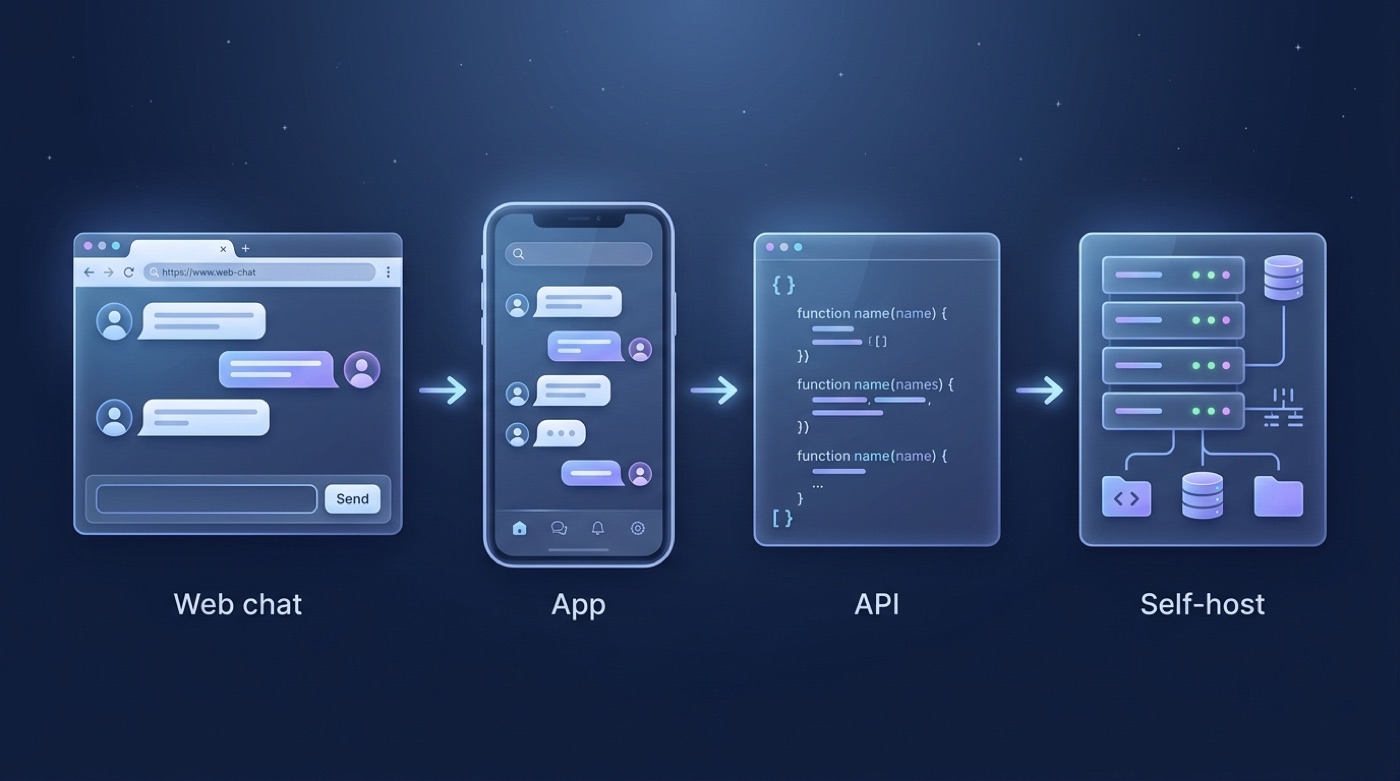
- Free web chat — use the browser-based chat at kimik3.pro, no signup or install required
- Official Kimi app or website — Moonshot’s own consumer product
- API access — build Kimi K3 into your own app or workflow via Moonshot’s developer platform
- Self-hosting via open weights — if and when weights are released, run the model on your own infrastructure
Using Kimi K3 in the browser (free chat)
The simplest way in is the free chat here: open the page, type a question or paste a document, and get a response — no account or installation needed. Worth noting up front: kimik3.pro is an unofficial, free Kimi K3 chat and reference site, not an official Moonshot AI product (more on that below).
Prompting tips for best results
- Give the model context up front — state the goal, the format you want, and any constraints before the main question
- Use the long context window deliberately — paste whole documents or codebases instead of summarizing them yourself first
- Be explicit for agentic or tool-use tasks — spell out the steps you want followed, not just the end goal
- Iterate — treat the first answer as a draft and refine with follow-up prompts rather than starting over
Kimi K3 API and Availability
Kimi K3 is available through the same access routes Moonshot has used for earlier Kimi models: a hosted API on Moonshot’s developer platform, the consumer Kimi app, and — per the pattern set by Kimi K2 — an open-weights track for anyone who wants to self-host. K2’s weights (both a Base and an Instruct version) were released openly in July 2025, and Moonshot’s own tagline frames the company’s broader mission simply:
Moonshot AI describes its goal on its official site as “seeking the optimal conversion from energy to intelligence” — a line that captures the efficiency focus behind the open-weight strategy. Exact API pricing and release dates for K3 specifically aren’t quoted here as fixed facts, since Moonshot’s public statements on those details are still evolving; availability may also vary by region.
Is Kimi K3 open source / open weight?
Open-weight and open-source aren’t quite the same thing — open-weight means the trained model parameters are published for anyone to download and run, while full open-source would also mean the training code and data are public. Kimi K2 shipped as open-weight (Base and Instruct versions available to download), and Kimi K3 is reported to follow that same open-weight approach, though the precise licensing terms should be checked against Moonshot’s own release notes when it ships.
What Languages Does Kimi K3 Support?
Kimi’s roots are heavily Chinese and English: the assistant launched for a Chinese-speaking audience before broadening its reach, and Moonshot has continued building strong bilingual and multilingual capability into each generation. Kimi K2 was reported to perform well on multilingual coding and reasoning benchmarks, and Kimi K3 carries that broader multilingual competence forward — useful for coding comments, documentation or analysis that isn’t purely English. Exact language counts aren’t published, so it’s more accurate to describe the model as broadly multilingual with particular strength in Chinese and English than to claim comprehensive coverage of every language.
Kimi K3 vs Kimi K2: What Changed
A newer step on the same foundation. Kimi K2 established the template: an open-weight Mixture-of-Experts model, strong coding results, agentic tool use, and Moonshot’s signature long context. Kimi K3 doesn’t abandon any of that — it’s positioned as the next generation built on the same priorities.
Same pillars, reportedly pushed further. Where K2 set the bar on SWE-bench coding performance and agentic task execution, Moonshot has framed K3 as extending those same strengths rather than pivoting to something new. Think of it as a refinement of K2’s formula rather than a different product.
What’s still unconfirmed. Exact parameter counts, context-window token figures, benchmark scores and pricing for K3 haven’t been pinned down in verifiable public sources at the time of writing. Anyone quoting precise numbers for K3 right now is likely working from unverified third-party claims rather than an official Moonshot spec sheet.
Explore the Kimi K3 Guide
Dive deeper into our fact-checked Kimi K3 reference:
- Kimi K3 features — capabilities across coding, long context and agentic tasks
- Kimi K3 API — access, endpoints and a quick start
- Kimi K3 pricing — free vs paid and how the cost model works
- How to use Kimi K3 — step-by-step across chat and API
- Kimi K3 use cases — coding, long documents and automation
- Kimi K3 benchmarks — how to read model performance
- Kimi K3 context window — long-context capability explained
- Kimi K3 vs GPT-5 · vs Claude · vs DeepSeek · vs Gemini
Frequently Asked Questions
- What is Kimi K3?
Kimi K3 is the newest large language model in Moonshot AI’s Kimi family — the model that powers the Kimi assistant. It is designed for coding, long-context document understanding, agentic tool use, writing and analysis. On this site you can chat with a Kimi K3-style assistant for free.
- Is this the official Kimi from Moonshot AI?
No. kimik3.pro is an independent, unofficial site that lets you chat with a Kimi K3-style assistant for free and provides reference guides about the Kimi K3 model. It is not affiliated with, endorsed by, or operated by Moonshot AI. For the official product, visit kimi.com or moonshot.ai.
- Is the Kimi K3 chat free?
Yes — you can start chatting instantly, with no login and no download. Basic messages are free and available 24/7. Extended usage is available via an optional subscription shown in the chat interface.
- Do I need an account to use it?
No account or sign-up is required to start. Just open the chat on this page and type your question.
- What is Kimi K3 good at?
The Kimi line is known for long context, coding and agentic tool use. Kimi K3 carries that forward for tasks like analyzing long documents, writing and debugging code, multi-step automation, research and multilingual work. See the use-cases and features pages for details.
- How does Kimi K3 compare to GPT, Claude, DeepSeek and Gemini?
Each model has different strengths in coding, reasoning, context length, openness and price. We keep fact-checked, qualitative comparison pages for Kimi K3 versus GPT-5, Claude, DeepSeek and Gemini — see the comparison guides linked below.