
Kimi K3 vs Claude Fable 5: How Moonshot AI’s Newest Model Compares to Anthropic’s Flagship
“Kimi K3 vs Claude” is really a comparison of two philosophies — Moonshot AI’s open-weight Kimi lineage versus Anthropic’s proprietary, safety-first Claude line, whose current flagship is Claude Fable 5. You can try Kimi K3 for yourself, but the right pick depends on what you actually need: coding, long documents, agentic automation, or openness.
Public benchmark figures for brand-new models are noisy and change fast, so this guide compares the two qualitatively — by design, positioning and documented strengths — and links to primary sources rather than repeating unverified scores.

kimik3.pro is an independent, unofficial free chat and reference site. It is not affiliated with, endorsed by, or operated by Moonshot AI or Anthropic. “Kimi”, “Claude”, “Claude Fable 5” and related marks belong to their respective owners.
Kimi K3 and Claude Fable 5 at a glance
Before diving into individual capabilities, it helps to see how the two model families line up on the dimensions that actually matter for picking one: who builds them, how they’re released, and what each is best known for.
| Dimension | Kimi K3 (Moonshot AI) | Claude Fable 5 (Anthropic) |
|---|---|---|
| Maker | Moonshot AI | Anthropic |
| Model lineage | Newer flagship, successor to open-weight Kimi K2 | Current flagship of the Claude line (family sizing: Haiku, Sonnet, Opus) |
| Weights | Open-weight heritage | Proprietary, closed |
| Signature strength | Long context | Coding, agentic tool use, safety |
| Architecture | Mixture-of-Experts (Kimi K2 heritage) | Proprietary, not publicly disclosed |
| Access | Download, self-host, API, chat | claude.ai, apps, API, cloud platforms |
Two different bets on how to ship an AI model
Moonshot AI built its Kimi lineage around an open-weight, community-downloadable approach — Kimi K2 was released under a Modified MIT License, and Kimi K3 continues that same lineage as the newer flagship model. Anthropic took the opposite route: Claude Fable 5 is closed, distributed only through Anthropic’s own apps, API and cloud partners, with a safety-first framing baked into how the company describes its mission. Neither approach is objectively “better” — they optimize for different things, and attributing openness or closedness correctly matters more than picking a winner. Until Moonshot publishes confirmed specifics on Kimi K3 itself, treat any claim about its exact parameter count or release date as unverified.
Who makes each model
Both companies have distinct histories, funding stories and stated missions, and those differences show up directly in how each model is built and shipped.
Moonshot AI (Kimi)
Moonshot AI is a Chinese AI company founded in 2023, co-founded by Yang Zhilin. Kimi is the company’s assistant product, and long context has been its best-known trait since launch. Moonshot’s own framing of its mission is worth reading directly: “Seeking the optimal conversion from energy to intelligence,” as stated on Moonshot AI’s official site. Kimi’s long-context heritage is well documented — Wikipedia notes the assistant supported “up to 200,000 Chinese characters per conversation” in its earlier releases, a capability the Kimi line has continued to build on with each generation, including Kimi K3.
Anthropic (Claude)
Anthropic is a US AI-safety company structured as a public benefit corporation. According to Anthropic’s Wikipedia entry, “Anthropic was founded in January 2021 by seven former employees of OpenAI, including siblings Daniela Amodei and Dario Amodei.” The company’s alignment approach, Constitutional AI, is built around making models “helpful, harmless, and honest.” On model sizing, the Claude entry on Wikipedia notes: “Since Claude 3, each generation has typically been released in three sizes, from least to most capable: Haiku, Sonnet, and Opus.” That three-tier structure is a useful mental model when comparing Claude’s lineup — of which Claude Fable 5 is the current flagship — against a single Kimi K3 release.
Coding: Kimi K3 vs Claude Fable 5
Claude Fable 5 continues the Claude line’s long, well-documented reputation for coding work, and Anthropic ships Claude Code, an agentic coding tool built for multi-step development tasks. Kimi K3 continues the Kimi line’s growing coding focus and, as an open-weight model, can be self-hosted or fine-tuned specifically for internal coding pipelines. Early public comparisons between the two circulate online, but benchmark scores for a brand-new model are volatile and often unverified — treat any leaderboard claim cautiously and check primary sources before relying on it.
What each is strong at for coding, in qualitative terms:
- Claude Fable 5: mature coding tooling built up across the Claude line, the agentic Claude Code product, and deep editor/IDE integrations.
- Kimi K3: open weights that enable self-hosting and custom fine-tuning for coding pipelines, plus long-context handling that helps with whole-repository reasoning.
- Both: active development focus on coding as a core use case, not an afterthought.
- Neither: a single, verified public benchmark score you can safely cite today.
If you want to see how Kimi K3 handles a coding prompt firsthand rather than trust a leaderboard, you can test Kimi K3 directly and compare it against your own repository.
Long context and long documents
Kimi’s brand was built on long context from the start — its early “200,000 Chinese characters per conversation” heritage, documented on Wikipedia, set the tone for the whole product line, and Kimi K3 carries that focus forward as the newer flagship. Claude Fable 5, like the wider Claude family across Haiku, Sonnet and Opus, is well known for handling large context windows, though exact figures shift across releases and should be checked against Anthropic’s own documentation rather than assumed.

In practice, both models are built to handle very long inputs — what matters is what long context actually buys you: reasoning across an entire codebase at once instead of fragments, digesting long PDFs or legal documents without chunking, and synthesizing information across multiple source documents in a single pass. Neither vendor’s exact token limits should be quoted here as fixed facts, since both companies update these figures as models evolve.
Agentic and tool use
Claude Fable 5 is heavily positioned around agentic and tool-use workflows — Claude Code and native tool-calling support are central to how Anthropic markets the model family. Kimi K3, being open-weight, offers a different path to the same goal: it can be wired directly into custom agent frameworks and self-hosted pipelines that a team controls end to end.
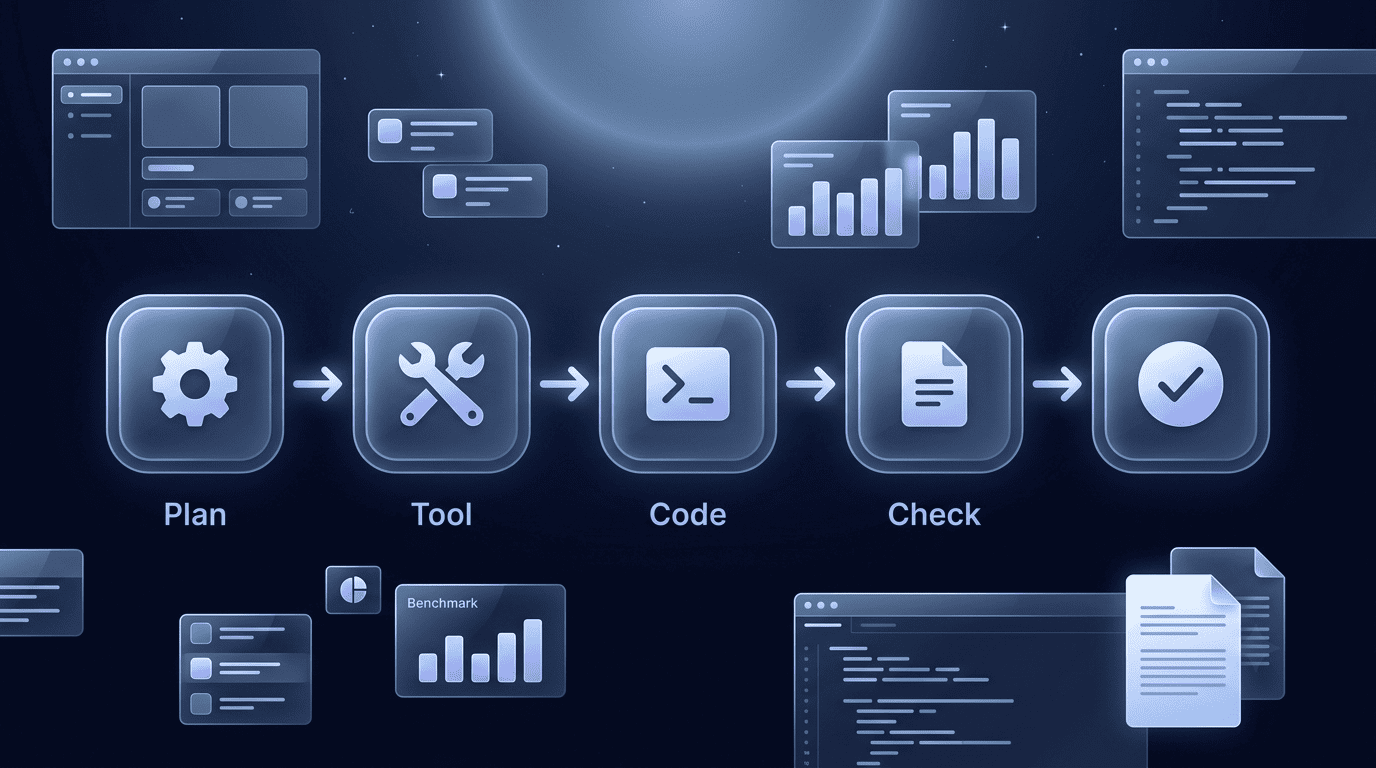
Agentic use cases both model families can target:
- Multi-step task automation that chains several actions together.
- Tool and function calling against external APIs or internal systems.
- Code-focused agents that read, edit and test across a project.
- Document workflows — extraction, summarization, and structured output at scale.
- Browser or computer-use style tasks framed generically, without claiming a specific unreleased feature.
Reasoning and general intelligence
Both Kimi K3 and Claude Fable 5 are frontier-class reasoning models by design intent, even though public “intelligence index” style rankings shift constantly and, for a just-released model like Kimi K3, are frequently unverified or based on incomplete testing. Rather than leaning on a single leaderboard number, it’s more useful to compare documented design goals directly.
AI research and products that put safety at the frontier.
Anthropic
That statement captures Anthropic’s framing well: safety and Constitutional AI sit at the center of how Claude is built and evaluated. Moonshot AI’s public framing leans the other way — toward open-weight distribution and long-context capability as the differentiators. Both are legitimate, verifiable design philosophies; neither one translates cleanly into a single “smarter” verdict without controlled testing on your own tasks.
Openness: open-weight heritage vs proprietary
This is the clearest, most durable difference between the two model families, and it’s the one least likely to change with the next release cycle. The Kimi family has an open-weight heritage — Kimi K2 was released under a Modified MIT License, with weights that are downloadable, inspectable and fine-tunable — and Kimi K3 continues that same lineage as Moonshot’s newer flagship. Claude Fable 5, by contrast, is proprietary and closed-weight, available only through Anthropic’s own channels.
| Openness & control | Kimi K3 (open-weight lineage) | Claude Fable 5 (proprietary) |
|---|---|---|
| Weights availability | Downloadable, open-weight heritage | Not released, closed |
| Self-hosting | Possible on your own infrastructure | Not available — cloud/API only |
| Fine-tuning / customization | Direct fine-tuning on downloaded weights | Limited to vendor-provided customization options |
| Inspectability / auditability | Weights can be inspected directly | Internals not publicly disclosed |
| Licensing model | Modified MIT License (Kimi K2 lineage) | Proprietary commercial terms |
| Vendor lock-in | Lower — you control the deployment | Higher — tied to Anthropic’s platform |
Cost and access
On cost, the honest answer is qualitative: open weights can lower cost for self-hosters and high-volume users who run their own inference infrastructure, while Claude Fable 5 is a managed, priced-per-use API or subscription with predictable enterprise support behind it. Neither model’s exact pricing should be quoted as fact here — prices change often on both sides, so check each vendor’s official pricing page before budgeting a project around either one.
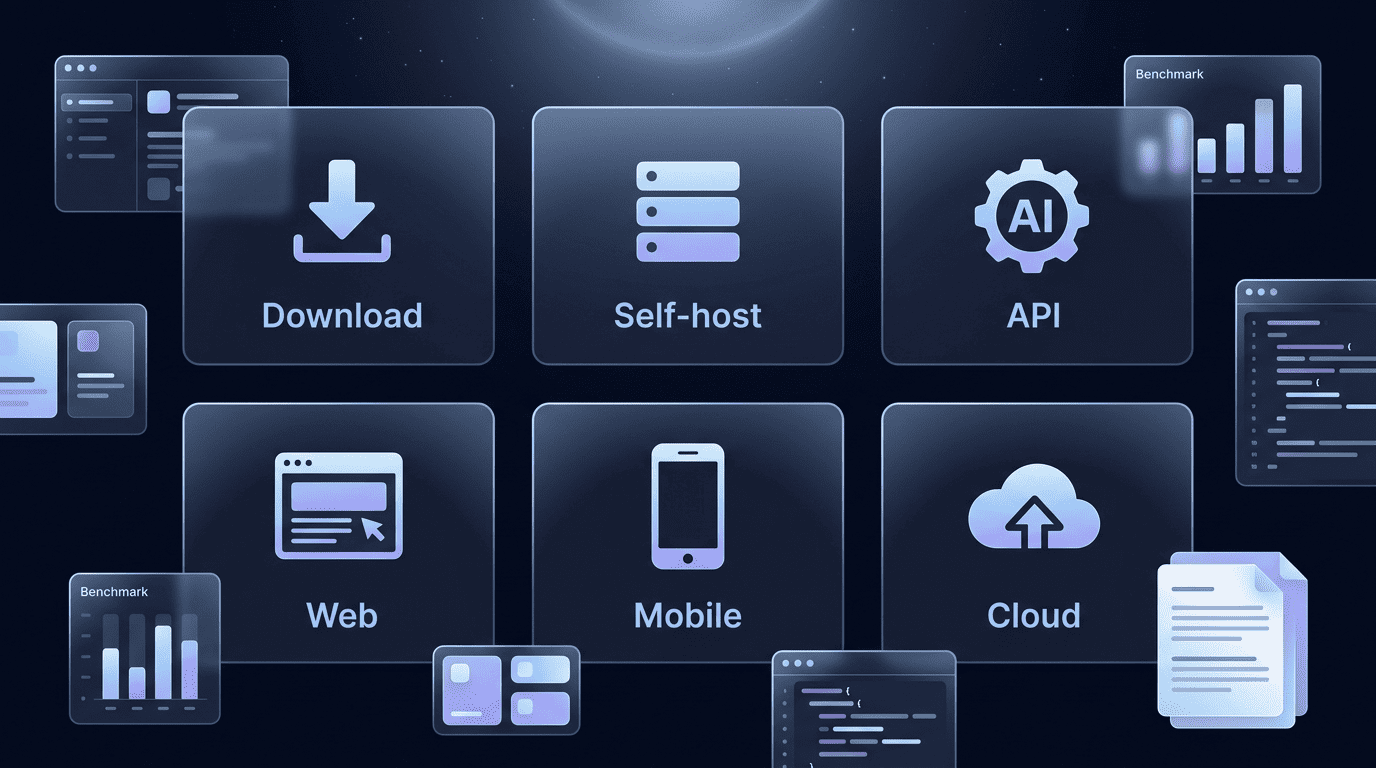
How to access each model in practice:
- Kimi K3: through Moonshot’s Kimi app and API, by downloading open weights via Hugging Face-style model hubs for self-hosting, or through a free chat at Kimi K3 free if you just want to test it without setup.
- Claude Fable 5: through the claude.ai web app, mobile and desktop apps, Anthropic’s API, and cloud platforms such as Amazon Bedrock, with subscription tiers available depending on usage needs.
- Both: API-first design that makes it straightforward to integrate into an existing product or internal tool.
- Neither: a one-size-fits-all price — actual cost depends heavily on volume, hosting choices and which tier you use.
Which should you choose?
Neither model is universally “better” — the right choice depends on whether you value control and openness or a managed, safety-focused product with mature tooling.
Choose Kimi K3 if:
- You want open weights you can inspect, self-host, or fine-tune.
- You need long-context handling on infrastructure you control.
- You want to test drive it for free before committing to a workflow.
Choose Claude Fable 5 if:
- You want a mature, managed assistant with strong coding and agentic tooling out of the box.
- You need enterprise-grade cloud access (including platforms like Amazon Bedrock).
- Safety-first design and Constitutional AI alignment matter to your use case.
For many people the honest answer is simple: try both on your real task before deciding. A quick way to start on the Kimi side is to open a chat and run your actual prompts rather than relying on secondhand comparisons.
A practical way to run that comparison yourself:
- Write down the exact task you care about — a coding fix, a long document to summarize, or an agentic workflow.
- Run the same prompt through Kimi K3 and through Claude Fable 5, without changing the wording between them.
- Check the openness question: do you need to self-host or fine-tune, or is a managed API enough?
- Compare how each handles your longest or messiest input, not a cherry-picked short example.
- Weigh access and support needs — enterprise cloud integration favors Claude Fable 5, full control favors Kimi K3’s open weights.
- Revisit official pricing pages for both vendors before committing to a production workflow.