
Kimi K3 vs DeepSeek: How the Two Chinese Open-Weight Champions Compare
Kimi K3 and DeepSeek are two Chinese-origin, open-weight-friendly model families that now anchor much of the global open AI ecosystem. Both are Mixture of Experts models that publish downloadable weights, and both have built reputations around coding, long context and agentic workflows, but they come from different labs, follow different licensing paths, and take different approaches to reasoning — read more about Kimi K3 to see how it fits into that picture.
This is a qualitative, high-level comparison rather than a benchmark scoreboard. Vendors and third-party leaderboards report shifting, sometimes-unverified numbers for both families, so this guide focuses on how each model is built, licensed and used, and points to official sources for exact current specs.
kimik3.pro is an unofficial free chat and reference site and is not affiliated with Moonshot AI or DeepSeek.
Who Makes Kimi K3 and DeepSeek?
Kimi K3 and DeepSeek’s models come out of two separate Beijing-and-Hangzhou labs that emerged within months of each other during China’s 2023 wave of frontier AI startups. Knowing who built each model — and why — explains a lot about how they’re licensed, priced and positioned today.
Moonshot AI and the Kimi line
Moonshot AI (月之暗面, “Dark Side of the Moon”) is based in Beijing and was founded in March 2023 by Yang Zhilin, a Tsinghua-trained researcher, along with several co-founders. The company is often named among China’s “6 AI Tigers,” a group of startups seen as the country’s leading generative-AI challengers. The Kimi product line is reportedly named after Yang’s English nickname. Kimi K3 is the newest member of the Kimi family, succeeding the open-weight Mixture of Experts model Kimi K2 and the reasoning-focused Kimi K2 Thinking release — in short, a newer and reportedly larger Kimi model built on the same MoE foundation. Moonshot AI’s own site is the authoritative source for current model specs and release notes: the company describes itself as building “AGI with everyone,” as stated on its official page at moonshot.ai.
DeepSeek AI and its models
DeepSeek (formally Hangzhou DeepSeek Artificial Intelligence) was founded in July 2023 by Liang Wenfeng and is owned by the quantitative hedge fund High-Flyer. DeepSeek became widely known for DeepSeek-V3, a large Mixture of Experts model, and for the reasoning model DeepSeek-R1, which briefly topped the US iOS App Store charts after its release. A newer DeepSeek-V4 line has followed. According to Wikipedia, DeepSeek is described as “a Chinese artificial intelligence company that develops open-source large language models,” as noted on its Wikipedia entry. For current model details and API access, DeepSeek’s own documentation at api-docs.deepseek.com is the primary reference.
| Maker | Founded | HQ | Founder | Flagship models |
|---|---|---|---|---|
| Moonshot AI | March 2023 | Beijing | Yang Zhilin | Kimi K2, Kimi K2 Thinking, Kimi K3 |
| DeepSeek AI | July 2023 | Hangzhou | Liang Wenfeng | DeepSeek-V3, DeepSeek-R1, DeepSeek-V4 |
- Both labs launched within four months of each other in 2023, during the same wave of Chinese frontier-model startups.
- Both are privately backed rather than divisions of the larger established tech giants — DeepSeek by hedge fund High-Flyer, Moonshot AI by venture investors.
- Both have released a mix of general-purpose and reasoning-specialized models rather than a single fixed product.
- Both publish official documentation and pricing pages that should be treated as the source of truth over third-party summaries.
Openness and Licensing: Both Open-Weight, With Nuances
Open weights are the headline trait that puts Kimi K3 and DeepSeek’s models in the same conversation, but “open” doesn’t mean identical terms, and the fine print matters if you plan to redistribute, fine-tune, or ship a product on top of either family.
What “open weight” means here
Open-weight means the trained model’s parameters are published for anyone to download, inspect, and run — either locally or on their own infrastructure — as opposed to a closed model that is only reachable through a paid API. It does not automatically mean open-source in the fuller sense: the training data, the full training pipeline and reproducibility details are typically not released alongside the weights. Kimi K3 and DeepSeek’s recent models are both open-weight-friendly, which is arguably their shared headline trait relative to closed US models available only through proprietary APIs. That single fact is a major reason both families show up together in comparisons: developers can self-host, audit, and modify either one, something not possible with a fully closed model.
Licensing differences
DeepSeek’s recent flagship releases have used the permissive MIT License, one of the most business-friendly open-source licenses available, allowing broad redistribution, modification and commercial use with minimal restrictions. The Kimi line, by contrast, has used a Modified MIT license for releases like Kimi K2 — a variant that keeps most of MIT’s permissiveness but adds specific conditions. For a team evaluating either model for a commercial product, license terms matter in practice: they affect whether you can redistribute fine-tuned checkpoints, whether attribution is required, and how the terms apply once your product scales past a certain size. Kimi K3’s exact license terms should be confirmed on Moonshot AI’s official model card rather than assumed to match Kimi K2’s, since terms can change per release.
Coding: Where Both Families Built Their Reputation
Coding is arguably the single use case that put both Kimi and DeepSeek on international radars, and it remains the area both labs emphasize most in their release notes and developer messaging.
Kimi K3 for coding. The Kimi line built its reputation on coding and long-form writing with Kimi K2, and Moonshot AI positions Kimi K3 specifically for long-horizon, multi-step coding and agentic development tasks — the kind of work that requires a model to plan across many files or steps rather than answer a single isolated prompt. Kimi K3’s reported “thinking mode” is described as helping with exactly this kind of multi-step reasoning during code generation and debugging. Independent evaluation is still developing for the newest release, so specifics are best confirmed on Moonshot’s own platform documentation.
DeepSeek for coding. DeepSeek’s coding heritage runs through its dedicated DeepSeek-Coder releases, and that lineage carries into the general-purpose strength of DeepSeek-V3. DeepSeek-R1’s reasoning capabilities are also commonly credited with helping on debugging and algorithmic problems that benefit from step-by-step deliberation rather than a single-pass answer. As with Kimi K3, exact benchmark standing (for example on tests like SWE-bench) shifts between releases and evaluation methodologies, so this comparison stays qualitative rather than citing a specific score.
- Long-horizon, multi-file coding tasks — an area Kimi K3 is explicitly positioned for.
- Algorithmic and debugging tasks that benefit from visible step-by-step reasoning — a DeepSeek-R1 strength.
- General-purpose code generation across common languages — both families compete here.
- Agentic coding workflows where the model plans and executes multiple tool calls — both labs market this capability.
Long Context: Reading Whole Repos and Documents
A larger context window lets a model take in more at once — an entire code repository, a long PDF, or several documents cross-referenced in a single pass — instead of forcing you to chunk and summarize inputs manually. Both Kimi K3 and DeepSeek have pushed context length aggressively across their release history.
Context windows compared
DeepSeek-V3 shipped with a 128K-token context window, and the newer DeepSeek-V4 line is reported to extend that further. Kimi’s context window expanded to 256K in earlier releases, with Kimi K3 reported to push toward the 1M-token range in some configurations. These figures should be read as “reported” or “up to” rather than fixed guarantees, since context limits can vary by deployment, API tier, and release version. For the exact current limit on either model, the official documentation pages are the only reliable source — this article intentionally avoids naming a single numeric winner.
| Capability | Kimi K3 | DeepSeek |
|---|---|---|
| Context window | Reported up to ~1M tokens | 128K (V3), larger reported in V4 line |
| Modality | Text, reported multimodal extensions | Primarily text-focused |
| Reasoning | Always-on “thinking mode” (reported) | Dedicated reasoning model (R1) |
| License | Modified MIT (per Kimi K2; confirm for K3) | MIT License |
| Access | API, Kimi app, open weights | API, app, open weights |
Reasoning and “Thinking Mode”
Reasoning-focused releases changed how both labs are perceived, moving the conversation from “which model answers fastest” to “which model can work through a hard problem step by step.”
- Reasoning mode helps most on multi-step math, logic puzzles, and problems with a verifiable answer.
- It tends to slow down response time in exchange for higher accuracy on harder prompts.
- It’s less useful for simple factual lookups or short creative requests, where a standard mode is often faster and sufficient.
- Both DeepSeek-R1 and Kimi’s thinking-mode releases expose more of the model’s intermediate deliberation than earlier, non-reasoning releases did.
DeepSeek’s reasoning models
DeepSeek-R1 popularized open reasoning at scale, showing visible chain-of-thought-style deliberation before producing a final answer, released under the MIT License alongside a set of smaller distilled variants designed to run on more modest hardware. That combination — strong reasoning plus permissive licensing plus smaller distilled options — is a large part of why DeepSeek-R1 became a reference point for the open-weight reasoning-model category.
Kimi’s reasoning approach
Kimi K2 Thinking, released as an open reasoning model, established Moonshot AI’s approach to deliberate, multi-step responses, and Kimi K3 is reported to build an always-on thinking mode directly into the model rather than shipping reasoning as a separate variant. That’s a philosophical difference worth noting: DeepSeek has offered reasoning as a dedicated model line (R1) alongside its general-purpose models, while Kimi K3’s integrated approach folds deliberation into the main model. Specifics on how and when K3’s thinking mode activates should be checked against Moonshot AI’s official release documentation, since integrated-reasoning behavior can change between versions.
Agentic and Tool-Use Workflows
Both model families are marketed heavily around agentic use — letting the model plan a sequence of actions, call external tools, and carry a task across multiple steps rather than just answering a single prompt.
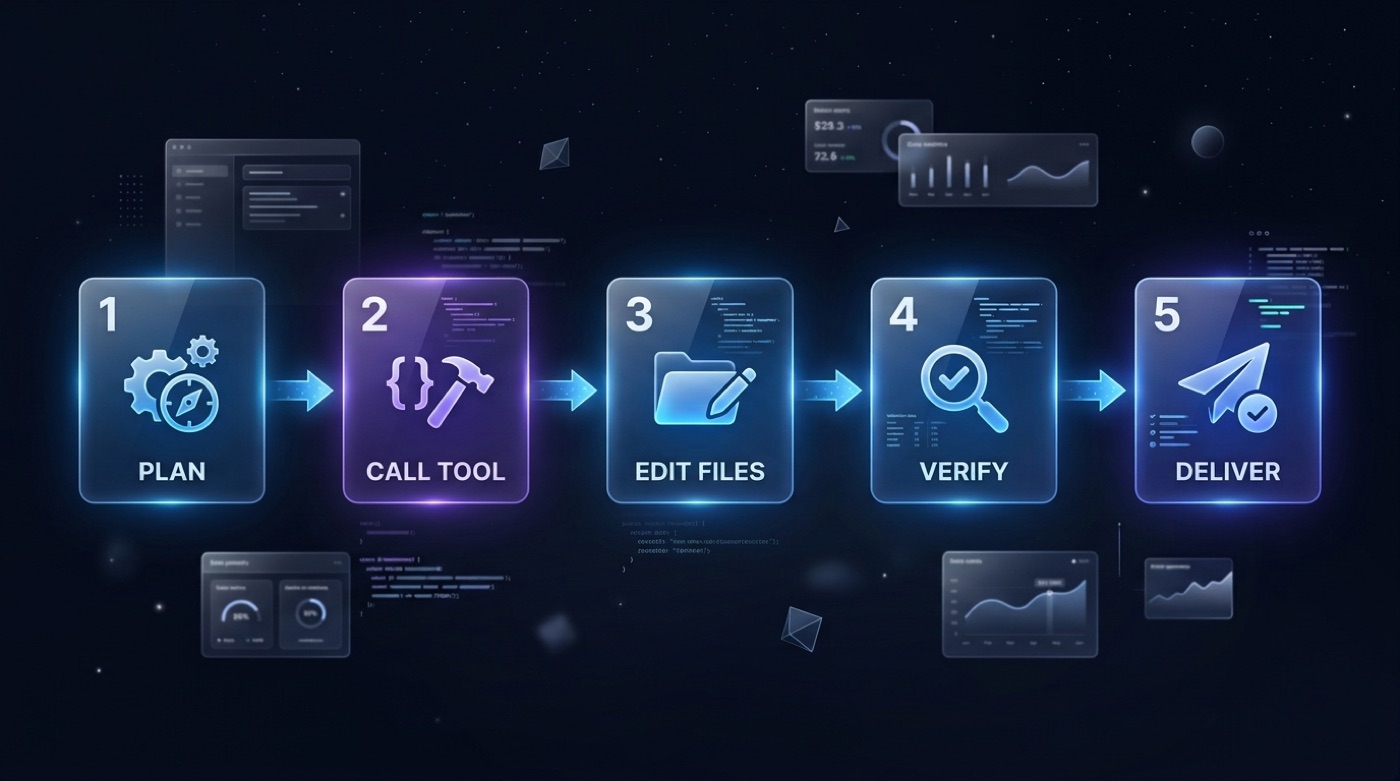
Kimi K3 is pitched by Moonshot AI for long-horizon agentic autonomy: tasks that involve many sequential steps, tool calls, or file edits before reaching a final result. DeepSeek’s models, meanwhile, are widely used inside third-party agent stacks and orchestration frameworks, partly because of their cost profile and open licensing, which make it economical to run many agent instances or fine-tune a variant for a specific workflow. Neither family publishes numbers in this comparison that hold up as a fair head-to-head measure of “which agent framework performs better,” since agentic benchmarks vary enormously by task design.
- Define the task boundary — a single tool call versus a multi-step workflow needing memory across steps.
- Check whether the workflow needs long-context recall (favoring larger context windows) or fast iterative reasoning (favoring a dedicated thinking mode).
- Decide between hosted API access and self-hosting the open weights, based on privacy and volume needs.
- Test both families on a small representative task before committing an entire pipeline to one.
- Monitor official release notes — agentic capabilities have been a fast-moving area for both labs.
- Multi-step coding agents that edit several files across a session.
- Research assistants that chain web lookups, summarization and citation.
- Workflow automation that calls external APIs or business tools in sequence.
- Customer-facing chat agents that need to hold long context across a conversation.
Cost and Access: How You Actually Use Each
Both Kimi K3 and DeepSeek are reachable in more than one way, and the right choice often comes down to whether you want convenience or control.
Hosted vs self-hosted
Both families offer a hosted API for pay-as-you-go access and downloadable open weights for teams that want to self-host or run the model through a third-party inference provider. Hosted access is simpler to start with and requires no infrastructure, while self-hosting gives more control over data privacy, latency and customization at the cost of managing your own hardware or cloud spend. DeepSeek has built a reputation for aggressive, low hosted pricing, while Kimi is available through the Kimi app and its own API tier. Exact per-token pricing changes frequently for both vendors, so check each company’s official pricing page rather than relying on a cached number — DeepSeek’s is published at api-docs.deepseek.com, and Moonshot AI’s at platform.moonshot.ai.
Free ways to try each
You can try Kimi through the official Kimi app or web chat, and DeepSeek through its own app or web interface, both without writing code. Community-run routers and aggregators also expose both model families through a single interface for developers comparing providers. You can also try Kimi K3 free through unofficial reference chat sites — a convenient way to test the model before committing to an API integration, though it’s worth repeating that such sites, including kimik3.pro, are unofficial and not affiliated with Moonshot AI or DeepSeek.
Kimi K3 vs DeepSeek: Which Should You Choose?
The honest answer is that both are excellent open-weight options, and the better fit depends on your task, budget and licensing needs more than on any single leaderboard number.
Choose Kimi K3 if:
- You want the newest, largest model in the Kimi family with reported very long context.
- Your workload is long-horizon coding or multi-step agentic work.
- You value an integrated, always-on thinking mode over a separate reasoning model.
- You’re comfortable checking Moonshot AI’s official terms for the exact current license.
Choose DeepSeek if:
- You need the most permissive licensing available, via the MIT License.
- You want a mature, widely-integrated ecosystem with broad third-party tooling support.
- Dedicated reasoning performance (via DeepSeek-R1) is your priority.
- Cost efficiency at scale is a primary constraint.
Exact benchmark leadership between the two shifts release to release, so treat any specific score you see elsewhere as a snapshot in time — verify current numbers against each vendor’s official announcements before making a final call.